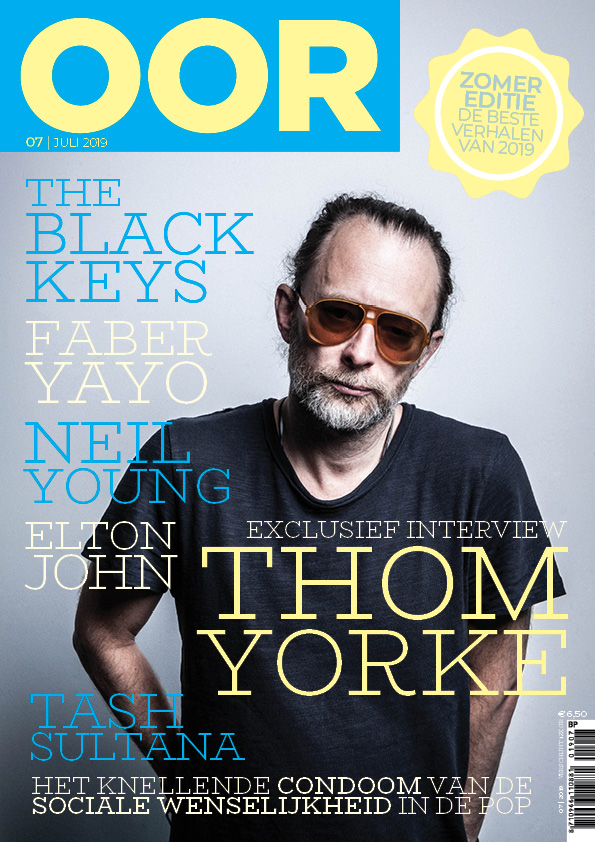
Thom Yorke: Troost en dissonantie en chaos en noise en microtonen...
Negen maanden na horrorsoundtrack Suspiria is er een nieuw soloalbum van Thom Yorke, ditmaal een echt album met echte liedjes. Althans, binnen het Yorke-idioom. Liedjes geboren op de dansvloer van rauwe technoclubs als Berghaim en uitgebouwd in theaters als Carré. De wedergeboorte van Kid A? Escapisme van een vijftiger? Of een intieme vorm van rouwverwerking? Op visite bij de man die de popmuziek al 25 jaar lang een serieus gezicht geeft.
OM ONS HEEN zitten rijke Britten te eten, veel gezellig kletsende deftige oudjes. Het restaurant van het hotel in Oxford, waar Thom Yorke interviews doet over zijn nieuwe soloplaat Anima, is vol geroezemoes. Herhaaldelijk wordt zijn prachtige, bijna poëtische woordenvloed hinderlijk weggedrukt door espressomachines. Na vijf minuten schuift onaangekondigd Nigel Godrich aan, al jaren zijn (en Radioheads) producer, aangever, vriend en steun en toeverlaat. Ook bij Tomorrow's Modern Boxes, het elektronische live-project dat aan de basis ligt van Anima en waarbij de Nederlandse visual artist Tarik Barri (Soedanese roots) als Dritte im Bunde fungeert. Ook in dit gesprek neemt Goodrich (aardig, intellectueel) de rol van aangever op zich. Zijn inbreng zorgt er voor dat ik dit niet het grote Thom Yorke-interview kan noemen, terwijl het dat in zekere zin wel is. Vooraf is mij verzocht om geen vragen te stellen over de albumtitel. Anima betekent geest. Het is ook de naam die de psycholoog Carl Gustav Jong gaf aan een van de archetypen uit het collectieve bewustzijn, namelijk dat deel van de innerlijke psyche dat met de vrouwelijke zijde van de man overeenkomt. Onduidelijk is of hier een verband ligt met de invloed van de dood van Thoms ex-vrouw (en moeder van zijn twee kinderen) Rachel Owen. Zij stierf in 2016 aan kanker, nadat ze al enige tijd uit elkaar waren. Inmiddels heeft hij een nieuwe levensgezellin, de Italiaanse actrice Dajana Roncione. Allemaal informatie met een hoog privé-gehalte, pijnlijk ook, die ons buitenstaanders eigenlijk niets aangaat. Lastig ook om over te praten met een derde erbij die de conversatie naar algemenere wateren stuurt. Dit gesprek scheert er diverse keren rakelings langs, maar in dit verhaal lijkt onuitgesproken rouwverwerking nooit ver weg. Na dit gesprek is me dat veel duidelijker dan tijdens.
MET WELKE intenties ben je aan deze plaat begonnen?
Thom: "Het was een lang uitgesponnen proces. Geboren uit optredens, zo muteerde het van het een naar het ander. Wat begon als een soort dj-show met microfoon ontwikkelde zich met de visuals van Tarik Barri tot iets anders. Eerst brachten we alleen bestaand materiaal, maar van lieverlee begonnen we loops te maken en daar allerlei lagen keyboards en drummachines aan toe te voegen. Zo kwamen we tot nieuwe nummers. De songs ontwikkelden zich dus vreemd genoeg vanuit een live-situatie. Elektronisch, met loops en bits and pieces, voortgekomen uit een performance. Veel mensen werken zo, voor ons was het de eerste keer. We deden het ook om het voor onszelf spannend te houden. Maar het waren sporadische reeksen optredens, dan repeteerden we voor bijvoorbeeld vier shows, stopten weer en pakten de draad pas een half jaar later weer op, heel frustrerend. Pas vorig jaar besloten we om een echte tournee te doen en toen lukte het om de plaat af te maken. Daarvoor zat er steeds van alles in de weg."
Een jaar geleden speelden jij, Nigel en Tarik samen in Carré in Amsterdam. Daar deden jullie zes nummers die nu op de plaat staan. Had je het huidige eindresultaat toen al in je hoofd?
"Niet helemaal. In zo'n livesituatie zijn er veel beats. Die zijn nodig voor de dynamiek van de set. Maar nuchter beschouwd vonden we dat te extreem en te confronterend voor een album. We zochten naar tegenwicht. Minder gebeuk, meer sophisticated arrangementen, het moest uitgerekter, abstracter."
Ervaar je zo'n performance als in Carré als eng?
"Ja, echt heel eng. Vaak moesten we ons van tevoren indrinken. Vooral toen we deze shows voor het eerst deden. Ook omdat er zoveel improvisatie aan te pas kwam. Ja, ik voelde me naakt. Exposed. Er zijn alleen maar een paar machines en de visuals, die eventueel nog als reddingsboei kunnen functioneren. Ja, ik zou kunnen weglopen en het werk aan de visuals overlaten, wat ook wel een aanlokkelijke gedachte was. In eerste instanties waren het late night dj shows. Die begonnen om twee uur's nachts. In [technoclub] Berghain in Berlijn bijvoorbeeld. Om in dezelfde vibe te zitten als de rest van de aanwezigen zat er weinig anders op dan te zorgen dat je al fucked up on tequila was voor je opging. Iedereen is op dat uur zo zat als een konijn. Dan kun jij niet nuchter zijn. Voordeel: als iets fout ging, maalden we er niet om. Dan schakelden we doodleuk over naar een andere loop of een ander tempo."
NIGEL GODRICH komt erbij zitten.
Nigel: "Het paste bij de party vibe."
Carré is geen technoclub, maar een deftig theater. Dat optreden had toch meer iets van een culturele gebeurtenis. Een voorstelling.
Thom: "In Berghain stonden we nog letterlijk achter de dj booth. Soms werkte dat soort shows, maar soms reageerde men er een beetje lacherig op. We worstelden er een beetje mee. Tot de keer dat we in Parijs tijdens een Pitchfork-avond optraden. Daar veranderde alles. Per ongeluk eigenlijk. Er was daar een podiumpje voor onze control areas. Hé, wat leuk, ik kan gewoon weglopen van al die machines en vooraan een beetje gaan dansen, laat Nigel maar lekker verder gaan met die machines. Zo begon het een theaterding te worden. Daarna vonden we het soms weer moeilijk om diep in de nacht pure rave shows te doen. Want het vergt heel veel concentratie en als je half bezopen bent, dan lukt het je niet. Vandaar dat we kozen om langs theaters te toeren, zo zijn we bij het andere extreem aanbeland. Die eerste theatershow was in Florence. Echt iets voor ons... We kozen voor een heel mooi Italiaans theater, maar terwijl we het podium opliepen was het: o shit! Want in die oude theaters in Italië mag niemand opstaan om te dansen. Verboden om uit je stoel te komen. Over een vibe killer gesproken! Wij spelen al die fucking bangers... En maar denken: waarom zitten die mensen daar zo stokstijf?"
Nigel: "In San Francisco deden we onze grootste show, voor meer dan achtduizend mensen. Ze hadden daar een heel goed soundsystem, dat is wel een vereiste. Wat begonnen was als een dj-ding in technoclubs bleek heel goed te werken in een grote arena. Daar werd het een echt optreden. Thom performt."
Thom: "Nu gaan we de volgende enge stap zetten. Festivals. Kijken of het ook overkomt in de open lucht. In mijn dromen zijn de nummers op deze plaat allemaal geschikt om zowel in een clubsfeer als in een theater of festival te functioneren. Ze leven ergens halverwege."
DE PLAAT ANIMA heeft een duidelijke opbouw. Een spanningsboog culminerend in wat een soort conclusie lijkt, het laatste nummer: Runwayaway. Na alle chaos en verwarring, na alle dystopische toestanden en paranoia in de voorafgaande nummers zing je...
Thom: "...This is when you know who your real friends are. Dat herhaal ik steeds opnieuw."
Dat pas écht belangrijke in het leven: dat je weet wie je vrienden zijn.
Thom: "Of juist het tegenovergestelde. De ultieme paranoia: in een crisissituatie erachter komen dat de mensen die je als je vrienden beschouwde dat helemaal niet zijn."
Dat afsluitende nummer werkt als een ontlading. Het openingsnummer, Traffic, voert meteen de spanning op. De tekst gaat over vrij zijn en daaraan het rechtontlenen om als een rijke zombie het partybeest uit te hangen in Kensington en Chelsea.
Thom: "Zoals ik wel vaker doe speel ik daar met wat ik zeg. Show me the money, party with a rich zombie, suck it in through a straw. Dat klinkt alsof ik kwaad ben op iemand, maar het zou ook best op mezelf kunnen slaan of op ieder ander. Bij het woord traffic denk ik aan het idee dat mensen handelswaar zijn, objecten met wie je kunt sollen en die je kunt verkopen. Human resources heten arbeidskrachten vandaag de dag. Alsof je ze kunt opgraven uit de aarde en als je ze niet meer nodig hebt, dan stop je ze weer terug in de grond. Wonderlijk! De zinnen in dat liedje bevatten sarcasme, ironie, woede en angst, het zit er allemaal tegelijk in."
Een ander liedje heet Impossible Knots. Zo klinken er veel, als onontwarbare knopen, gespannen, hectisch, als de verklanking van het moderne leven. Als een soort kggggg.
Thom: "Ja, die kant gaat de muziek vaak op. Maar die paniek zit er ook in als de muziek meer vloeiend klinkt. Zelfs in Dawn Chorus! Er zit een diepe angst in dat nummer. Er is veel angst, en die komt op vele manieren. Ik schreef de teksten in de context van dingen uitproberen op het podium. Het was vaak een kwestie van wat goed voelde als ik voor een publiek stond met deze muziek. Niet zozeer als een songwriter achter de piano die woorden probeert te vinden voor wat hij diep van binnen voelt. Meer het tegenovergestelde. Ik gooi eigenlijk onbekommerd slogans de lucht in. Als die slogans landen, dan zie jij er iets in, jij op jouw manier, ieder op zijn of haar manier. En ikzelf heb er dan weer lol in dat ik bijvoorbeeld een woord als foie gras kan zingen, dat ik dat in een song heb weten te verwerken. Dat soort dingen. Er zit veel plezier en lol in de teksten, maar ook het totaal tegengestelde."
IK HOOR IN deze plaat veel onderdrukte woede, maar ook een pleidooi voor compassie.
Thom: "In mijn hoofd overheerst één beeld. Mensen gaan naar hun werk. Ze dragen het uniform dat daarbij past. Hun lichamen bewegen zoals hun werk dat verlangt. Maar hun onderbewustzijn verzet zich. Hun geest daarentegen, hun bewuste geest, zegt: ik moet mijn rol spelen in deze structuur. Hun lichamen, onze lichamen - want die vertellen altijd wat er fout zit voordat onze geesten dat doen - onze lichamen zeggen tegen ons: dit kan zo niet verder, en zij komen in verzet. Op een puur fysieke manier zeggen onze lichamen dat we een andere kant op moeten. Ons lichaam verzet zich tegen het programma dat het heeft ontvangen, terwijl onze geest alsmaar blind voortgaat. We hebben de laatste tijd onze mond vol van politiek en de impact daarvan, maar volgens mij zijn we op dit punt aangeland door iets veel fundamentelers. Namelijk door het gevoel dat we overhouden aan onze omgang met de wereld om ons heen. Onze onderlinge communicatie is steeds gefragmenteerder, die verloopt steeds meer via black mirrors. We beleven nu een reactie op de onzekerheid die wij alsmaar meer voelen in ons dagelijks leven. Qua banen, qua reizen, qua alles eigenlijk. Al die onzekerheden hopen zich op en dat veroorzaakt trauma's. Mensen zijn in wezen sociale dieren. Een kind dat door een groep mensen wordt verzorgd kan goed gedijen, maar in een eenoudergezin komt zowel het kind als die ene ouder vaak niet goed tot bloei. Wat ons uniek maakt is dat het leren begrijpen van de subtiliteit van menselijk gedrag een belangrijk deel uitmaakt van onze ontwikkeling. Die vorm van menselijke interactie wordt momenteel ondermijnd, dat is er aan de hand. En zelfs als je het over politiek hebt, als jij zegt dat de plaat enerzijds kwaad klinkt en anderzijds als een kreet om hulp... beide reacties, woede en hulp zoeken, zijn symptomen van een trauma."
In de politiek claimen steeds meer figuren, de Trumps zeg maar, het recht op kwaadheid. Ze zijn er trots op. Jij hebt het nummer I'm A Very Rude Person. Daarin zing je: I have to destroy to create. Dat lijkt me niet ironisch bedoeld.
Thom: "Nee, dat is het ook niet. Dat nummer kwam voort uit dat ene zinnetje: I'm a very rude person."
Wat je dus niet bent.
Thom: "Nou, blijkbaar ben ik dat wel. Iemand heeft dat ooit zo letterlijk tegen mij gezegd: Weet je wat, you're really a very rude person. Ik kan het wel terzijde schuiven als een grap, maar waarschijnlijk is het gewoon waar. Die tekst valt terug te voeren op een verlangen om alles kapot te maken. En dat is weer een reactie, omdat ik me niet in staat voelde om ergens mee om te gaan. Dat is alles. Volgens mij heeft Trump geen waardige of gerechtvaardigde woede. Het is bij hem allemaal narcisme. Als je kwaad bent, wees het dan op een coherente manier. De rellen uit de jaren zestig waren een schoolvoorbeeld van coherente woede. Destijds konden ze die constructief verwoorden, en ze waren in staat om die te rechtvaardigen."
OPVALLEND is het nummer The Axe. Ik vond het wel ironisch dat dezelfde mensen die OK Computer maakten, er nu voor lijken te pleiten om de moderne machinerie met een bijl te lijf te gaan. Spreekt hier een grote teleurstelling uit over de nieuwe technologie?
Nigel: "Was OK Computer dan zo optimistisch over de nieuwe technologie? Volgens mij niet."
Thom: "Grappig, destijds werd ons aangewreven dat wij zulke Luddites [negentiende-eeuwse beweging die zich keerde tegen de industriële en technische vooruitgang] waren, maar dit terzijde. The Axe... De reden waarom ik al sinds mijn twaalfde muziek maak, is omdat het mijn manier was om dingen te verwerken en dan vervolgens verder kon. Niet op een 'directe' manier. Zo van: dit moet uit mijn systeem, dus laat ik er maar een liedje over maken. Meer als: als ik een stuk muziek kan creëren dat voor mij op dat moment iets betekent, dan is dat een manier om te kunnen dealen met wat er in mijn leven aan de hand is. Maar soms ga ik naar mijn machinerie, dat kan een piano, drummachine of synthesizer zijn, en dan zie ik al die prachtige, flonkerende lichtjes, en het kind in mij vindt het echt heel spannend om die te gebruiken, maar de machinerie geeft mij niet wat ik wil. De supercomputer geeft niet het gewenste antwoord. Hij geeft de verkeerde uitkomst. Dát bedoel ik met dat liedje. Zoals iemand die lijdt tevergeefs hoopt hulp te krijgen van datgene wat hem in het leven altijd hielp. Maar nu dus niet. In plaats daarvan staat de machinerie erbij als een stel speelgoedsoldaatjes die nietszeggende bewegingen uitvoeren. Dát bedoelde ik ermee!"
VOLGENS EEN van de weinige interviews over dit album heb je bij het componeren veel momenten van writer's block gekend.
"Nee. Dat had die journalist verkeerd begrepen. Ik lijd wel eens aan een writer's block, maar nu lag het wat anders. In creatief opzicht speelden er twee zaken. Dit elektronische project en de horrorsoundtrack Suspiria. Suspiria was goed voor me, want het was het omgekeerde van wat ik normaal doe. Plus een excuus om alleen maar angstaanjagende geluiden te maken en niet naar mijn pen te grijpen om teksten te schrijven of akkoordenschema's te bedenken. Ik kon me gewoon lekker onderdompelen in studiogeluid. Precies wat ik nodig had. Want op dat moment kon ik weinig vinden als ik achter de piano plaatsnam of de gitaar pakte. Er was wel wat, het nummer Suspiria, dat kwam uit het niets. Maar dat was een zeldzaamheid. En dan waren er de liveshows, die vonden plaats in een mêlee van gekte. Je vindt veel makkelijker wat je vocaal nodig hebt wanneer de situatie je ertoe dwingt. Maar thuis vond ik alleen maar troost en dissonantie en chaos en noise en microtonen..."
Nigel: "Het maken van deze plaat, inclusief de shows, nam een jaar of drie, vier in beslag. Een proces van beginnen, verfijnen, ermee verder gaan en opnieuw verfijnen. Er lag steeds veel half afgemaakt materiaal. Ik probeerde Thom op te jutten om de boel te structureren en deed mijn uiterste best om hem zover te krijgen dat hij er zijn energie aan besteedde en zijn rol invulde. Dat we op tournee gingen versnelde het proces ook. Het heeft alleen maar zin om nieuwe dingen te doen als je het op een andere manier aanpakt en het een ongebruikelijke ervaring oplevert. We doen het alleen maar omdat we het leuk vinden."
Thom: "Ja, het ís elektronisch en je gebrúikt machines, maar het menselijke element is er ook. Ik zing, ik ben de persoon op het podium. Als je voor een publiek staat, dan moet je de mensen overtuigen, je moet op een of andere manier contact met ze maken. Bij veel elektronische live-muziek, hoezeer ik daar ook van houd, sta je vooral te kijken naar iemand die machines bedient. Dat kan al dan niet een heel krachtige impact hebben, maar dat was niet wat wij wilden doen, we wilden iets anders."
Nigel: "Een aantal van de tracks op de plaat is gewoon wij, die live spelen. Het zijn live-opnames van onze performances. Die we dan weer mee terugnamen naar de studio om verder te bewerkten. Dat werkte heel goed."
Thom: "In de studio zetten we onze apparatuur ook letterlijk precies zo op als we live doen."
Nigel: "Een album maken vraagt om een element van theater. Ook al zie je niets, zo werkt muziek nu eenmaal. Je moet iets horen arriveren en daarna gebeuren. Daar zijn de arrangementen voor. Wij hebben iets voor op al die andere elektronische muziek. Wij hebben Thom, wij hebben zijn stem en wat hij allemaal kan, zijn melodische talenten. Dat maakt het uniek. Hij is geweldig gereedschap."
Thom: "Ik ben een groot stuk gereedschap, haha!"
Nigel: "Heel krachtig. Het vertaalt zich naar iets wat een ander niet kan."
Thom: "Nou ja, een klein stuk gereedschap dan."
JULLIE MAKEN nu al heel lang muziek, jij bent nu vijftig.
Thom: "Dank je."
En jij?
Nigel: "Achtenveertig."
Zit er nog rek in de ontwikkelingsmogelijkheden van het soort muziek dat jullie maken?
Thom: "Sowieso: het is heel moeilijk voor mij om geen muziek te maken. Als je praat met mijn kinderen of mijn partner, met iedereen die mij kent: ophouden met werken, ik weet niet echt hoe dat moet. Zoals ik al zei: sinds mijn twaalfde is het mijn kleine magische dingetje. Of het nou gaat om wat aanklooien met geluiden of echt schrijven achter de piano, ik móét het blijven doen. Maar tegelijkertijd, bij het maken van dit album duurde het wel even voor we wisten hoe dit zou gaan werken. Ik kan me niet voorstellen dat we daar op dezelfde voet mee door zullen gaan. Zo van: we hebben nu de sleutel gevonden, daar gaan we mee verder. Nee, het is eerder: dat hebben we gehad."
Misschien is er gewoon niet zoveel meer mogelijk in dat genre.
Nigel: "Is elektronische muziek dood?"
Thom: "Hahaha."
Zoals men nog niet zo lang geleden sprak over rock is dood? Misschien speelt muziek ook een minder belangrijke rol in de maatschappij.
Thom: "Muziek en maatschappij zijn twee handen op één buik. Dat is altijd zo. De maatschappij heeft altijd muziek nodig. En vice versa. Het enige probleem daarmee is de connectie tussen de twee. Wij worden gecureerd door algoritmes die ons niks zeggen, ze geven ons shit die we niet willen."
Nigel: "Internet kijkt erg achterom. Ironisch voor een nieuwe technologie. Cultureel gezien is het internet erg retro."
Thom: "Algoritmes functioneren alleen maar op basis van het verleden. Ze kunnen geen sprong maken naar iets in de toekomst."
Thom: "Neem het beroep kunstcurator. Je laat een machine toch ook niet bepalen welke schilder of beeldhouwer baanbrekend is? Waarom denken we plotseling dat we het oordeel over muziek kunnen overdragen aan algoritmes? Dat kan ik niet begrijpen. Alleen maar omdat we geen mensen willen betalen om dat best zware werk te doen. Het heeft natuurlijk ook een gigantisch voordeel om zo'n enorme catalogus te hebben van alle muziek die ooit door mensen is gemaakt. Ik kan mijn kinderen vertellen over Sidney Bechet. Zo raken ze helemaal verslingerd aan Sidney Bechet [Amerikaanse jazzmuzikant, saxofonist/klarinettist uit de eerste helft van de twintigste eeuw]. En zij kunnen mij weer attenderen op Billie Eilish of waar zij dan ook naar luisteren."
Je kunt wel zeggen dat internet alles toegankelijk maakt, maar jullie presenteren je op internet vooral als een groot mysterie... en Thom als een mythe. Daar is Radiohead beroemd om. Helemaal niet toegankelijk.
Nigel: "Je bent een mythisch persoon."
Thom: "Wat bedoel je? [Leunt naar achter, handpalm in camerastand, selfiepose] Moet ik dan op Instagram gaan? Volgens mij werkt dat niet. Denk jij dat het zou werken?"
Nigel: "Hoe wij ons op internet presenteren is gewoon verwant met wat wij cultureel spannend vinden. Wij gaan met de nieuwe technologie om zoals wij dat deden met de oude, want wij zijn van de tijd dat er nog gewoon platen waren. Misschien begrijpen wij het nieuwe op een oude manier."
NU WE HET over het verleden hebben: Kid A wordt volgend jaar twintig jaar.
Nigel: "Raar! Dus: wij zouden juist blij moeten zijn dat mensen terugkijken. Want nu gaat het om ons."
Thom: "Nu zijn wij onderdeel van het verleden. Ik vond beelden van ons in Dublin. We namen de shows altijd op. We hadden van die rare cameraatjes waarmee we alles vastlegden op VHS. We kwamen op en speelden The National Anthem. Het album was net uit, de recensies waren vernietigend. Die versie van The National Anthem duurt tien minuten. Alsof er een fucking bom ontploft! Zo heftig! Ik kan mezelf niet herkennen. Alleen Colin met zijn bril. Hij gaat er helemaal in op. Staat te bassen als een maniak. Er was een rare vorm van paniek toen we die plaat uitbrachten. Fuck!"
Nigel: "Denk nooit aan wat je vroeger gedaan hebt, denk altijd aan nu. Dat is een regel. Anders kom je nooit tot iets nieuws."
Thom: "Echt heel raar. Ik ben zeer verbaasd als ik mezelf terug zie: wie is dat verdomme? Nou ja, ik herken mezelf wel een beetje, maar genieten van de herinnering, dat kan ik niet. Afgeleerd, heel vroeger, toen we in het Creep-ding zaten. Een grote platenmaatschappij vertelde ons wat we moesten doen. Doe dit, doe dat. Ik weet precies hoe het voelt om klem gezet te worden. We hebben echt geluk gehad dat we ons daarvan konden bevrijden. Bij al onze muziek daarna weigerden wij categorisch om weer in dat als-dat-werkt-dan-we-doen-het-nog-een-keer-ding gezogen te worden. Die weigering is de fundamentele reden voor ons bestaan."
Anima, hoewel heel anders, heeft ook dat elektronische dat Kid A had.
Thom: "Ja, dat vind ik wel freaky."
Nigel: "Tijdens een laatste luistersessie om de plaatvolgorde te bepalen zei jij: Kid A!"
Thom: "Klopt. Maar geen moment hebben we tegen elkaar gezegd: laten we wat zout en peper over Kid A strooien!"
Nigel: "De overeenkomst is niet zozeer muzikaal als wel qua energie. Hoe je er meteen ingetrokken wordt."
Thom: "Dezelfde ruimtelijkheid, klein, zoals in Dawn Chorus, en dan weer heel groot en hoe de plaat eindigt."
Maar ook dat frenetieke onderliggende gevoel van chaos dat vraagt om een ontlading.
Thom: "Zie je, het had erger kunnen uitpakken."
IN DAWN CHORUS zit een grote angst, zei je. Ik dacht dat het een nummer over rouw was.
Thom: "Nee, raar genoeg niet. Het is heel lang geleden geschreven. De meeste mensen maken op een bepaald punt van hun leven wel een crisis of schok mee en kijken dan verwonderd terug: wat is er gebeurd? Het blijkt dan altijd anders in elkaar te zitten dan je zou denken. Het liedje laat het zinnetje if you could all again volgen door a little fairy dust. Steeds wordt een oprechte zin gevolgd door een diep sarcastische Disney-zin. Daarom is het cumulatieve effect zo beangstigend. Je bevindt je in een kamer met alle vragen die je jezelf stelt. Je hangt die vragen allemaal aan de muur en sluit de deur. Zie het maar zo. Voor de meeste mensen zullen woede, ironie of sarcasme de eerste vorm van verdediging zijn als ze een crisis of iets beangstigend meemaken. Daarom past Dawn Chorus ook zo bij de rest van het album. Het rare ervan is ook: Dawn Chorus heeft geen melodie, het is een gedicht. Er is maar één noot. En woorden. Dat is ongebruikelijk voor mij. Normaal verberg ik mij achter de melodie, maar in dat nummer weigerde ik dat. Het moest zijn wat de woorden waren. Heel ongemakkelijk. Dat is waarschijnlijk de reden waarom het zolang geduurd heeft voordat dat nummer een thuis vond. Het was er al ten tijde van In Rainbows."