THE MOJO INTERVIEW
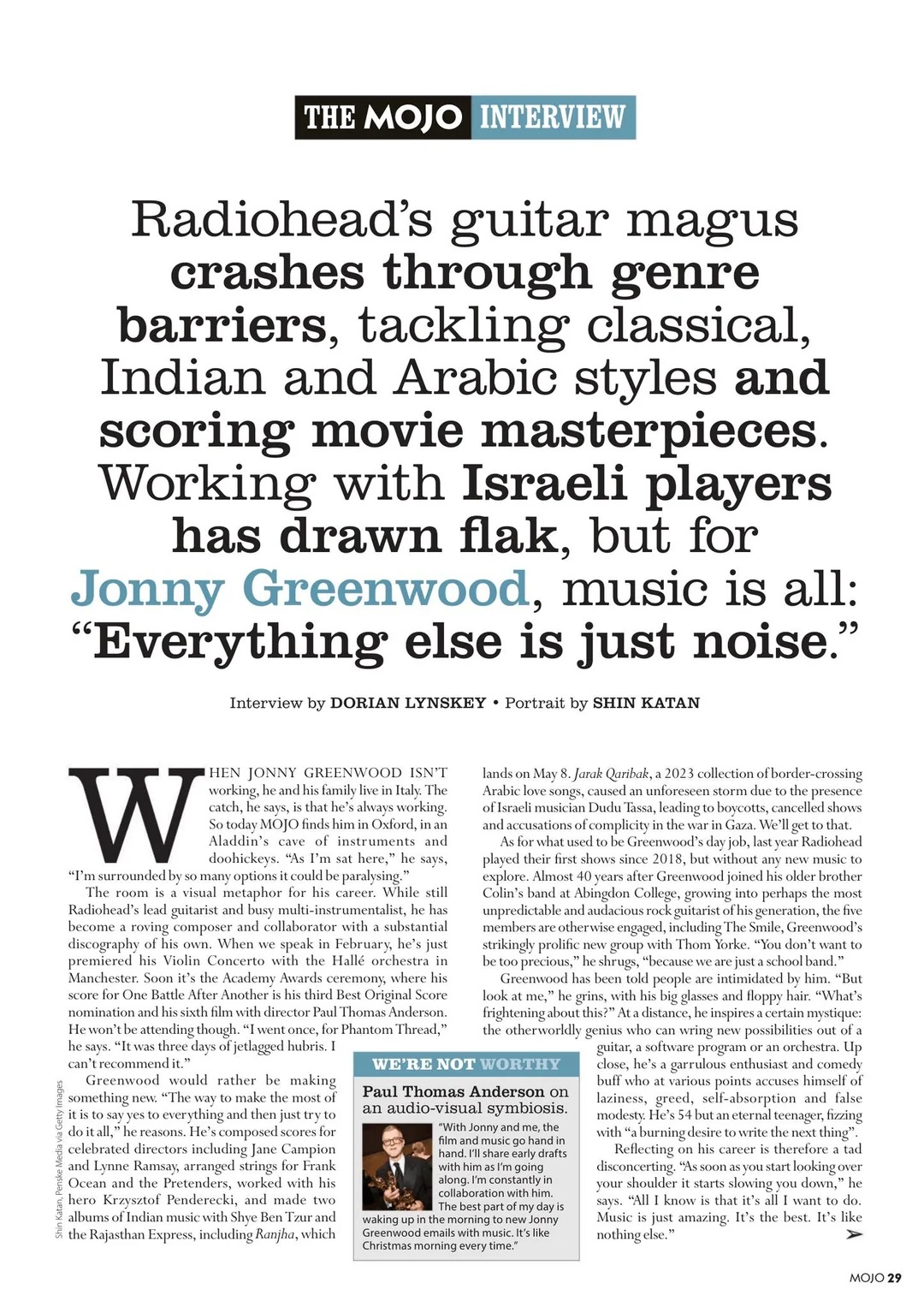
Radiohead’s guitar magus crashes through genre barriers, tackling classical, Indian and Arabic styles and scoring movie masterpieces. Working with Israeli players has drawn flak, but for Jonny Greenwood , music is all: “Everything else is just noise.”
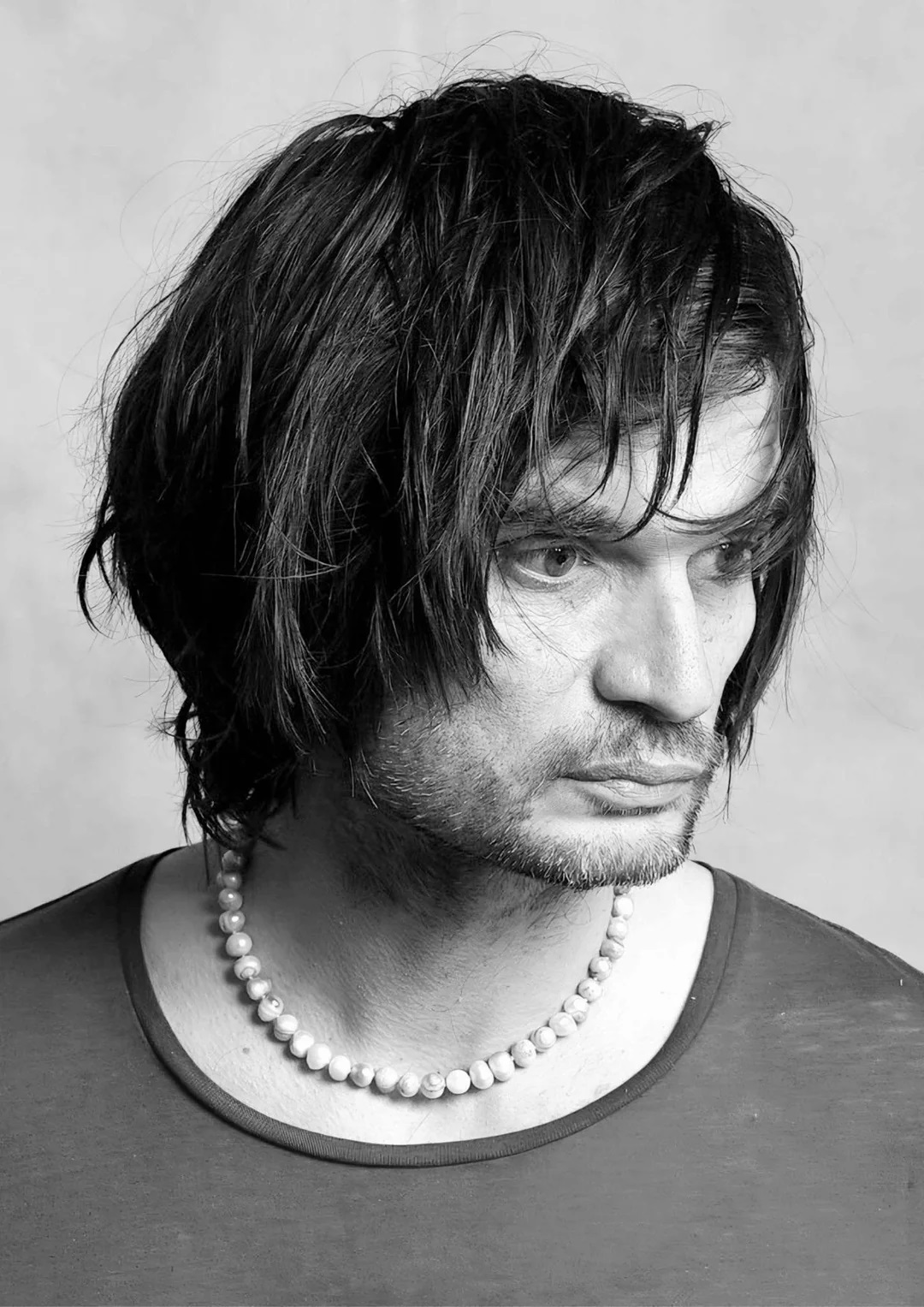
Interview by DORIAN LYNSKEY / Portrait by SHIN KATAN
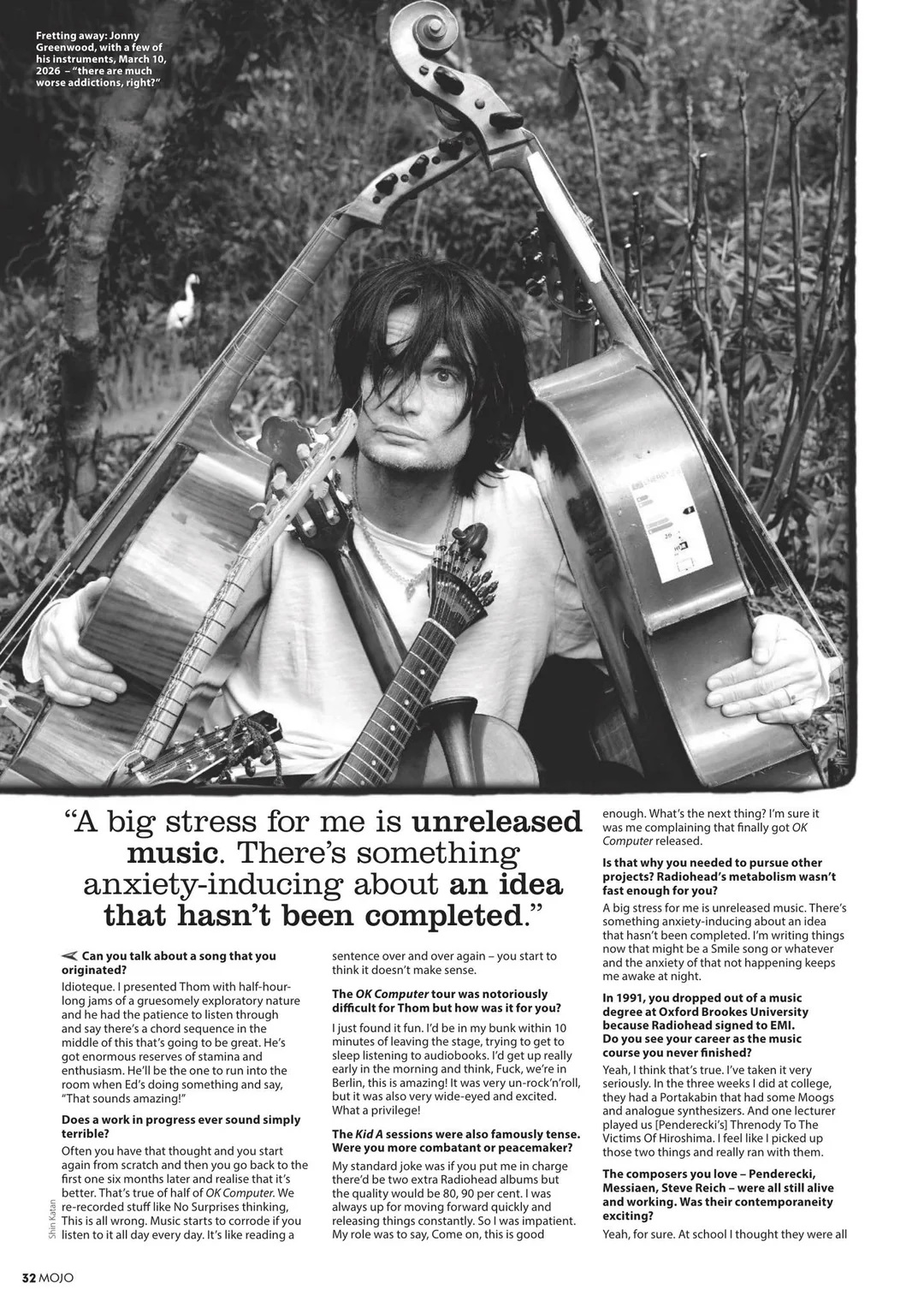
WHEN JONNY GREENWOOD ISN’T working, he and his family live in Italy. The catch, he says, is that he’s always working. So today MOJO finds him in Oxford, in an Aladdin’s cave of instruments and doohickeys. “As I’m sat here,” he says, “I’m surrounded by so many options it could be paralysing.”
The room is a visual metaphor for his career. While still Radiohead’s lead guitarist and busy multi-instrumentalist, he has become a roving composer and collaborator with a substantial discography of his own. When we speak in February, he’s just premiered his Violin Concerto with the Hallé orchestra in Manchester. Soon it’s the Academy Awards ceremony, where his score for One Battle After Another is his third Best Original Score nomination and his sixth film with director Paul Thomas Anderson. He won’t be attending though. “I went once, for Phantom Thread,” he says. “It was three days of jetlagged hubris. I can’t recommend it.”
Greenwood would rather be making something new. “The way to make the most of it is to say yes to everything and then just try to do it all,” he reasons. He’s composed scores for celebrated directors including Jane Campion and Lynne Ramsay, arranged strings for Frank Ocean and the Pretenders, worked with his hero Krzysztof Penderecki, and made two albums of Indian music with Shye Ben Tzur and the Rajasthan Express, including Ranjha, which lands on May 8. Jarak Qaribak, a 2023 collection of border-crossing Arabic love songs, caused an unforeseen storm due to the presence of Israeli musician Dudu Tassa, leading to boycotts, cancelled shows and accusations of complicity in the war in Gaza. We’ll get to that.
As for what used to be Greenwood’s day job, last year Radiohead played their first shows since 2018, but without any new music to explore. Almost 40 years after Greenwood joined his older brother Colin’s band at Abingdon College, growing into perhaps the most unpredictable and audacious rock guitarist of his generation, the five members are otherwise engaged, including The Smile, Greenwood’s strikingly prolific new group with Thom Yorke. “You don’t want to be too precious,” he shrugs, “because we are just a school band.”
Greenwood has been told people are intimidated by him. “But look at me,” he grins, with his big glasses and floppy hair. “What’s frightening about this?” At a distance, he inspires a certain mystique: the otherworldly genius who can wring new possibilities out of a guitar, a software program or an orchestra. Up close, he’s a garrulous enthusiast and comedy buff who at various points accuses himself of laziness, greed, self-absorption and false modesty. He’s 54 but an eternal teenager, fizzing with “a burning desire to write the next thing”.
Reflecting on his career is therefore a tad disconcerting. “As soon as you start looking over your shoulder it starts slowing you down,” he says. “All I know is that it’s all I want to do. Music is just amazing. It’s the best. It’s like nothing else.”
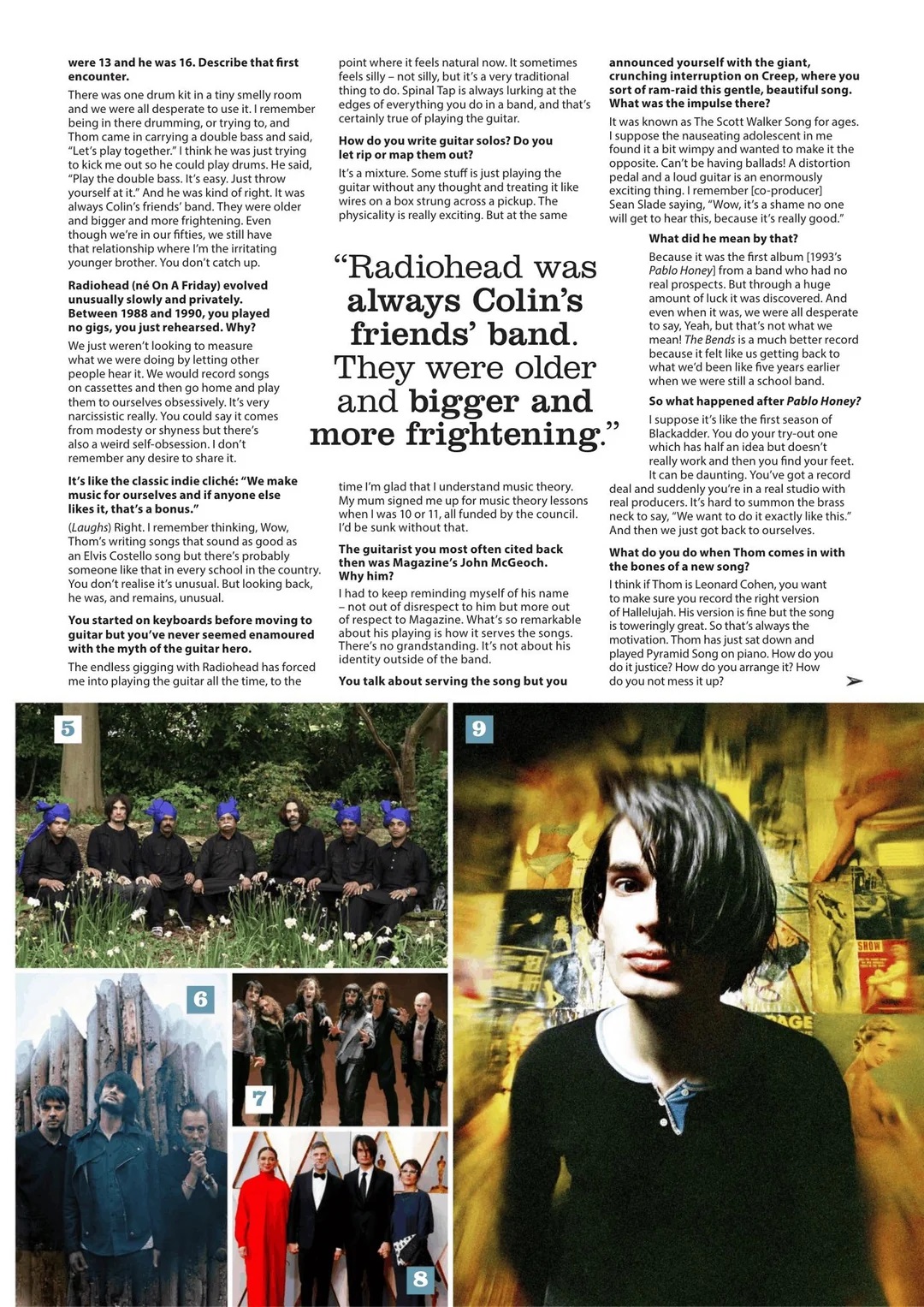
Can you describe your first experience in Rajasthan, making 2015’s
I met Shye Ben Tzur 15 years ago and talked about how to do a recording of his music that wasn’t overly reverential but was respectful to what he was singing about. How do we record this music with the same spirit as we do Radiohead records? Nigel Godrich agreed to come out to India and the Maharaja of Jodhpur agreed to let us record in this amazing fort. I couldn’t have asked for a better experience. Paul Thomas Anderson came and filmed it for a great documentary. That’s exactly how it felt to be there.
[
from the website of the magazine, posted/updated april 17th 2026:]
Speaking in the latest issue of MOJO, on sale now, Radiohead guitarist Jonny Greenwood has recounted his attempt to sabotage the recording of the band’s breakthrough hit Creep, interrupting frontman Thom Yorke’s song with his now distinctive guitar crunches in the studio.
“It was known as The Scott Walker Song for ages,” Greenwood tells MOJO’s Dorian Lynskey. “I suppose the nauseating adolescent in me found it a bit wimpy and wanted to make it the opposite. Can’t be having ballads! A distortion pedal and a loud guitar is an enormously exciting thing,”
Despite initial interest in the UK press for 1992’s Drill EP, Creep’s parent album, Radiohead’s 1993 debut Pablo Honey, was initially met with indifference and disappointing sales. When it was first released in September 1992, Creep only reached number 78 in the UK singles chart. It wasn’t until the song was picked up internationally and in the US that it gathered momentum, reaching number 7 exactly a year after it was released.
“I remember [co-producer] Sean Slade saying, ‘Wow, it’s a shame no one will get to hear this, because it’s really good,’” remembers Greenwood. “Because it was the first album from a band who had no real prospects. But through a huge amount of luck, it was discovered. And even when it was, we were all desperate to say, Yeah, but that’s not what we mean! The Bends is a much better record because it felt like us getting back to what we’d been like five years earlier when we were still a school band.”
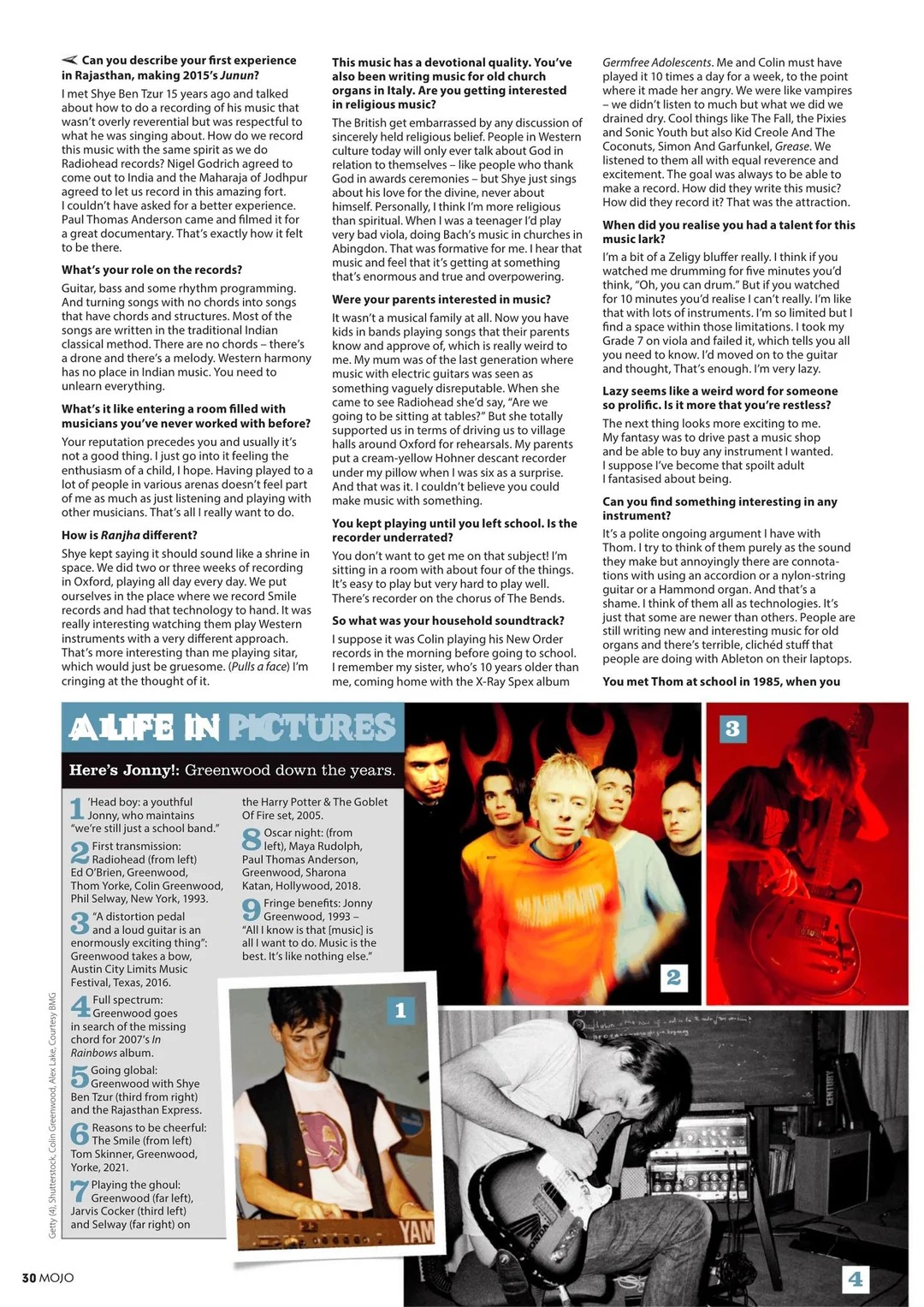
Three years younger than brother Colin, Greenwood was 13 when he was asked to join the group Colin and classmate Thom Yorke had formed with fellow pupils at Abingdon School near Oxford, Ed O’Brien and Phil Selway.
“It was always Colin’s friends’ band,” he says. “They were older and bigger and more frightening. Even though we’re in our fifties, we still have that relationship where I’m the irritating younger brother. You don’t catch up.”
The band initially calling themselves On A Friday, as that was the day they would rehearse in Abingdon’s music room, Greenwood recalls being impressed by Yorke’s songwriting abilities even when they were still at school.
“I remember thinking, Wow, Thom’s writing songs that sound as good as an Elvis Costello song, but there’s probably someone like that in every school in the country. You don’t realise it’s unusual. But looking back, he was, and remains, unusual.”
Elsewhere in the interview, Greenwood describes the process of working on the songs Yorke brings to the studio.
“I think if Thom is Leonard Cohen, you want to make sure you record the right version of Hallelujah. His version is fine, but the song is toweringly great. So that’s always the motivation,” he says. “Thom has just sat down and played Pyramid Song on piano. How do you do it justice? How do you arrange it? How do you not mess it up?”
When asked about a Radiohead song he originated, Greenwood recalls presenting Yorke with “half-hour-long jams of a gruesomely exploratory nature” during the protracted sessions for 2000’s Kid A, which would form the basis of Idioteque.
“He had the patience to listen through and say there’s a chord sequence in the middle of this that’s going to be great," says Greenwood. "He’s got enormous reserves of stamina and enthusiasm. He’ll be the one to run into the room when Ed’s doing something and say, ‘That sounds amazing!’”
Recording the follow-up to 1997’s OK Computer was famously tense, as the rest of the band initially struggled to work around Yorke’s embrace of electronic music. As a multi-instrumentalist trained in music theory, however, the younger Greenwood was perhaps best equipped to adapt to the group’s new way of working.
“My standard joke was if you put me in charge, there’d be two extra Radiohead albums, but the quality would be 80, 90 per cent. I was always up for moving forward quickly and releasing things constantly. So I was impatient,” recalls Greenwood of the sessions. “My role was to say, Come on, this is good enough. What’s the next thing? I’m sure it was me complaining that finally got OK Computer released.”
It’s been ten years since Radiohead released their last album, A Moon Shaped Pool, during which time Yorke and Greenwood have released two albums as The Smile, but last year Radiohead reconvened for their first shows since 2018.
“It’s incredible that we’re playing live again and that it feels so great and everyone is loving each other’s company. You hear of other bands getting together and having multiple managers and multiple sound people. We seem very blessed.”