Spinner, august 2010
[Interview with Phil]
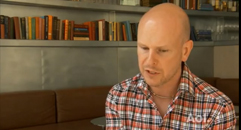
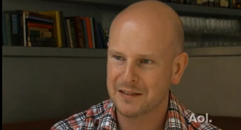
Philip: Hi, I'm Philip Selway and you are watching me on spinner.com
Q: Was the genesis of Familial in 2001?
Philip: So they are pretty much date from that point, actually erm that is when, kind of, all the little fragments of music which were starting to come together for me. Thats when they really started to gather a head of steam. Then it got to the point about 3 or 4 years ago I realised that actually they was a collection, what felt like a collection of songs there. It felt like something that didn't fit within Radiohead, it was something I wanted to do outside of that, that was the point where I decided I wanted to make a record.
Q: Are the songs autobiographical?
Philip: Not in the details, kind of probably in the sentiment there. It was when I was approaching 40, and so it was wrapped up in all those life changes. The fact that you are at that mid point, or you hope it is the mid point anyway in your life, so you equal measure you are looking backward and looking ahead, but there is also the sense of very significant relationships around you. Your immediate family or colleagues that you have worked with for a very long time. All these relationships are, you know, great complexity - there this richness to them - the way that they shape you. And the impact that you have on them as well. For me, it was taking the, the emotional response of that out and putting them into the songs. And actually taking, without sounding overly sentimental, taking the warmth out of that. That was what I wanted to kind of underpin the record, was that, the warmth.
Q: Could you talk about the experimentation on the album?
Philip: There are all those layers in there, they are very delicate as well. And they all have very distinctive voices. All the people who were playing on the record Lisa Germano, Sebastian Steinberg, Glenn Kotche and Pat Sansone from Wilco. Just these great musicians who were very fortunate, very in tune with that idea of, of almost restraint if you like, keeping the space around the song and then actually finding ways of scuffing it up so it didn't become overly pretty or overly presious.
Q: Could you talk about the music origin of "Don't Look Down"?
Philip: Musically it is the oldest one on there. But it took the longest to write lyrically, it was the last lyric that I finished. Coming back to that thing, you know, of being at that mid point in your life, that song is very much bound up in that. You know just that sense of your responsibilities in your life, the sense that you have all this accumulated experience by that point and it can be quite a heady place to be. It is just that sense of don't look down - it was originally going to be - that was a working title for the album and then i discovered that it was a Cerys Matthews record so I kind of knocked that one on the head, but then again it led me to Familial which actually pools the record, the artwork and everything together in a much better way.
Q: Could you talk about the process of developing your voice?
Philip: That has been quite a long process actually. I mean I've done backing vocals in Radiohead for a while but that is a very different kind of demand on it. What I took from that is that I knew I could sing in tune which is a good starting point but its been finding a tone or delivery that actually reflects you and actually brings something out of the material that you are writing.
Q: What have you learned from Thom as he developed his vocals over the years?
Philip: I think it is the same as watching everybody in the band, everybody how they have just kind of honed their own particular take on what they have been playing. There are some very strong voices that come through that and finding out what is appropriate to you. Try to apply that to finding a way into the vocals. It took a while though of trial and error and some horrendous moments of hearing it back for the first time [shakes head] just not how I heard it in my head. You know - Mickey Mouse singing on these tracks that isn't how I envisioned it really. [laughs]
Q: How did you transition from drums to vocals?
Philip: Actually with these songs I just wasn't hearing drum parts at all, which was a very peculiar experience for me. You know, part of me thinking - Have I lost it? - but it was just the concentration of writing the songs. I don't have a broad theoretical vocabulary thats put it that way, but I suppose there is a similarity between how I work on parts between drumming and song writing it is - I just follow my instincts until something, theres something that I find satisfying and try and disrupt that in someway as well.
Q: Have you performed outside of Radiohead?
Philip: I have yes, very, relative low key shows. Back at Easter, it was Lisa Germano and myself and Sebastian Steinberg and another musician called David Coulter we went out for a fortnight and we played in Italy, Spain and Portugal - it wasn't a hardship in any way at all, but for me it was an apprenticeship for me. I had no experience of being at the front of the stage and so then going into clubs where basically the audience were a couple of feat away from you it was kind of a Baptism of Fire. It is a very intense way of learning a different side of stagecraft really.
Q: What is the most rewarding part of making this record?
Philip: It is that sense of amazement that you have found that again as well.. That place, yes, with each passing one, you think, maybe that is my window into that kind of relationship with music has maybe gone. it is great when it come back round again - at 43! A good age to start it [laughs]