BBC 6 Music 'The First Time with...', june 18th 2017
[Interview with Colin]
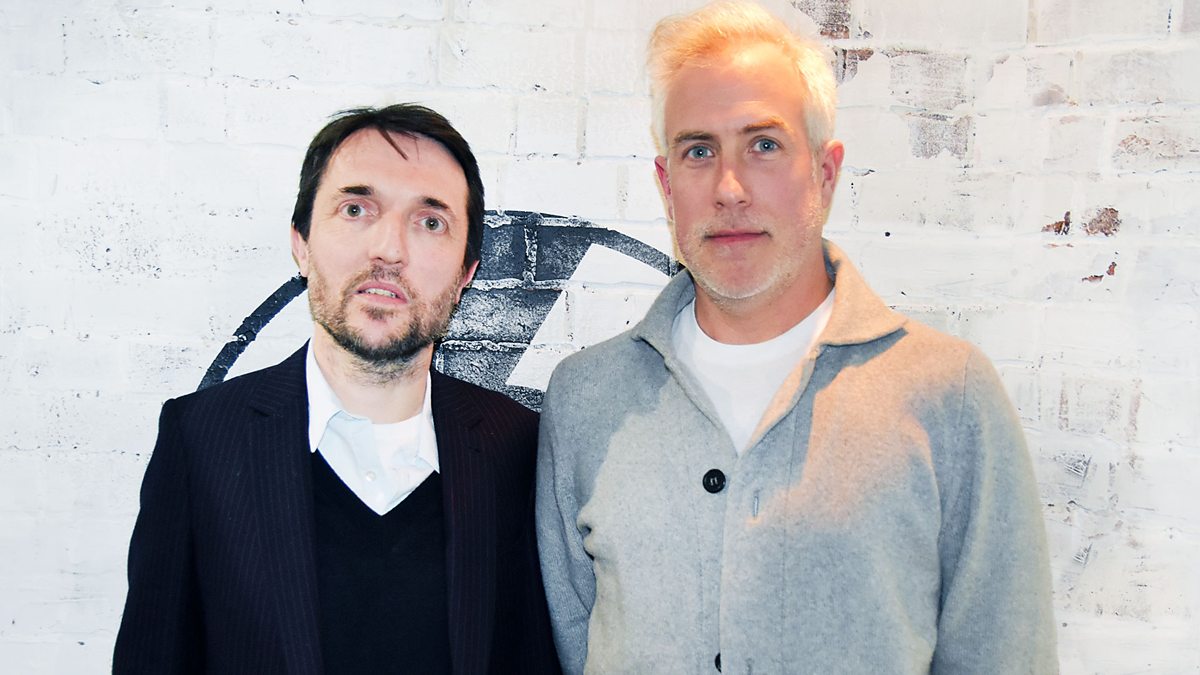
[This is a transcript from an audio recording. The interviewer is Matt Everitt. Transcript by Giselle. Click image for full size.]

[recording starts here]
Matt Everitt:
Hello, I'm Matt Everitt and welcome to ‘The First Time…’ on 6 Music. This is the series where we meet some of the most influential and best-loved musicians around, and look at the seminal first musical moments that shape their lives and their careers. One of the common elements in all great bands is that each member brings something unique to the group…that idea about the whole being greater than the sum of the parts. This is often true. In those terms, this week's guest brings a distinct sound and feel to his band. His unique bass playing adds a dynamic and depth to the group's recordings, and his phrasing and rhythm underpins the band's live performances. So we continue as 6 Music celebrates Radiohead season. I'm pleased to say my guest on ‘The First Time’ this week is Colin Greenwood. In this interview, Colin and I look back on how he and his brother and bandmate Jonny started playing music, his early passions for Joy Division and The Fall, and the bonds that brought Radiohead together when they first formed in 1985. We also talk about Radiohead's first release, The Drill EP, how the band's sound evolved, and the public's perception of the group. And, of course, their upcoming Glastonbury Festival appearance. Colin also discusses his own deep passion for soul and jazz, and we play some fantastic music from Fleetwood Mac, Alice Coltrane, Sam Cooke, Kid Creole and the Coconuts. But I started by asking Colin the traditional first-time question… …can you remember the very first time you were aware of music as a kid?
Colin Greenwood:
Aware of music as a kid? No, I can't...remember that. But I can remember the first time I started listening to music, which is when I was in Germany, where my parents lived in the 70’s. We had one of those little Rank turntable radio receivers, and my father had the massive headphones with the big coily lead. Yeah, but they had like, you know, the usual thing…they had like, about…I don't know…10, 12 records of the smattering of classical, some Burl Ives, you know, some Scott Joplin and of course the Sunday Morning Record, which was a Simon and Garfunkel…Bridge Over Troubled Water record…
Everitt:
Was there a fascination with music? Was it part of the furniture, or was it something that was treated in a certain amount of reverence, do you think?
Colin:
I think my parents really liked classical, Schubert, Mozart - and when we were kids in Germany, so I would have been about 7 and Jonny would have been at 5, they bought me a guitar and they bought Johnny a recorder…or they bought Johnny a guitar and me a recorder…well, anyway, so…and little pitch pipes to tune the…I find the pitch pipes more fun to play than the guitar. Anyway, so we had that stuff together and…yes, so they encouraged it, but it wasn't like - they weren't like super musical people. There were rumours that one of our great, great ancestors sung in the choir at Westminster Abbey in year dot. But I never saw evidence for that, so - there's no great musical background or heritage in the Greenwood clan.
Everitt:
Another question we always ask is the first single, the first single that's yours….
Colin:
Oh yeah, first single that's mine…well, you know, I like to think the two musical choices that I made in the early days sums up the rest of my musical life, and the first album that I bought at Haken & Bell Music in Abingdon was Kid Creole and the Coconuts.
Everitt:
[Laughs] I can…I can hear the Coconuts echoing in most of the work of your band…
Colin:
Absolutely, and since I've spent more time, bought more records, and I've seen the connections with Z Records and that sort of post-punk American labels coming out of New York in the late 70s, early 80s…and there was connections between Kid Creole and that really cool label. I think Soul Jazz Records put out a great compilation of that stuff. And, you know, and the Coconuts like hanging out at Stiff Records and I think they did some work with Elvis Costello and…all various connections and stuff. So I'm trying to say they're even cooler than just Kid Creole, freestanding, and the Coconuts. So that was the first record - and the second record I bought was a single called Everything's Gone Green with Procession on the b-side by New Order. I was into Joy Division when I was really, really little as well so…I was like 12 or something, so I listened to a lot of that.
Everitt:
What appealed to you about Joy Division at that formative age?
Colin:
I think it was…maybe I'm exaggerating a bit. Am I 13? Well, my sister, you know, was a big influence, eight years older than me, so it was all the full Magazine, Joy Division…so that's why I got the New Order single, because I wanted to find out what happened after Joy Division. And we used to cover - Radiohead used to do a little cover of Procession, I think. When we were playing, when we started out, when we were at school together in the 80s. And it was a beautiful grey and blue card Peter Savile design, sort of that sort of 30s Italian sort of futurist design, you know, and he did the album covers for Magazine, Correct Use of Soap as well, which was similar sort of Italian modernist, I suppose, whatever you would call it - futurist ideas. So yeah, well, it's got to be Kid Creole and the Coconuts, of course. ‘Annie, I'm not your daddy, because if I was in your blood you wouldn't be that ugly.’
Everitt:
Jonny said that you used to play records very, very loudly, sort of inflicting them on the house. Is this true?
Colin:
Did I? Yeah, probably. Yeah. My mum bought one of those Sony media stereo towers with a smoked glass lid on the front, you know, when she went to Greens Debenhams. So she was like, she was very…bless her, she was very…she tolerated our obsessions with music, and she put up with them, and she was very supportive. She had a bit of a zero-sum argument for why she wanted to encourage our music because she said, ‘well, at least it keeps you off the streets’. Me and my brother would be pimping or selling drugs…in downtown Abingdon…if we weren't like, practicing in the village halls religiously with Radiohead from a pre-teen age…
Everitt:
I’m just trying to imagine: the Greenwoods instead of the Crays.
Colin:
I don't!
Everitt:
Oxford version, these two…’watch out for them Greenwoods, they're a dodgy couple of geeses…’
Colin:
She's like, ‘I don't think there's any future in it, but at least it stops them from like, you know, running protection rackets’ and things like that.
Everitt:
When you started playing, when you started to first play the bass, who did you want to be? Who was the poster on the world?
Colin:
Well I didn’t want to play bass, I wanted to play guitar because I played classical guitar with Thom, when Thom and I had guitar lessons. So I wanted to be the guitarist in the band, but I'm settling some scores - I'm setting something straight here - I don't want to sound too invited, just slightly invited…no, but Ed got the guitar first and he wanted to be the guitarist. So Thom's like, ‘you can't play…you're not playing guitar. You can play bass guitar’ I was like, okay…aw…but fortunately, I love my Joy Division, and I love soul music. I'm a white soul boy. So it's like, Otis Redding was one of my first big loves and passions. And Booker T & the MG’s, and Donald ‘Duck’ Dunn. So, and that combination of simplicity and brilliant style and stuff like that. So that's where it came from.
Everitt:
What's the Otis track we should play then?
Colin:
Well, it's so many! I mean, obviously the famous one is Sitting On The Dock of the Bay. I don't know, Fa-Fa-Fa (Sad Song)? Try A Little Tenderness? You choose.
Everitt:
Why do you think you and Thom clicked when you first met?
Colin:
I guess because we were in the same year, and I suppose it was the first people who got together with the band would be like, Thom and Ed, and then…if there was an order, me and then... I got Jonny in and…so Jonny owes his place in Radiohead to me. And I never let him forget that every single day.
Everitt:
[Laughing] Every single day, on stage, just wander over… ‘you’re only here ‘cus I am…’
Colin:
We did a show years ago when we started, and we played the Rock Garden and I forgot the keyboard stand. And so he had to play with his back to the audience. And he's still - that's another thing he's invited about to this day. So anyway, I think it was a sort of disaffection with our surroundings. I think it was the fact that we were, you know, a place in our - where we just didn't like being where we were, and it was a way of escaping into something else that we can make that was for ourselves, that's all really.
Everitt:
Do you remember your first time on stage? Your first time performing on stage?
Colin:
I can't - I think probably it was this one when we did - the one that I love that I really, really am proud of is we played this place called the Jericho Tavern in Oxford when we were 16. and we were like third band on a three or four band bill, but the other band was this - it was the same band with different names so basically there were two bands; it was us, and this other band.
Everitt:
That's cheating, you can't just change your name and get twice as long a set!
Colin:
Yeah well, you know, we were called On a Friday at the time. I thought…I was in the bathroom so there was like, a poster of the first show up in the bathroom which I started colouring in my name in red - then stopped halfway through realizing it was a bad idea. That's the story of my life; making a decision, not following it through and then regretting it bitterly. So there's the poster to remind me every day - that's the first show. So anyway, we had like three saxophones as well…and we were playing - and it was like, that was the time when it was the most exciting. That was amazing - it was in the summer of like 87’, I think?
Everitt:
It's 25 years since the Drill EP.
Colin:
Yeah. Gary Davies, was it record of the week or something?
Everitt:
What?!
Colin:
Yeah, it was DJ Gary Davies made it his record - his single of the week on a Sunday.
Everitt:
Hang on, back up a minute…
Colin:
I know.
Everitt:
How does that happen?
Colin:
How does that? Because it's random and it's like, I remember Sunday morning and the lyric is quite dark and intense and stuff. I'm in the morning waking up listening to this, and I thought when I heard it on the radio, it's on radio…it's on a Sunday on Radio One, I was like, ‘well that's fine’, it's like, I can do something else now, it's like, ‘we've made it, we've put a record out and it's been played on the radio - doesn't get any better than that!’ It's downhill from there…so that was in 92’? Playing at the…I can't remember, I think it was Nottingham, and we had this other band…we were putting out Drill, they used to cassettes for $2.99 but they'd give it to the shops for free as promo items and of course we were all very excited we go to the local indie record shop in wherever it was Leicester or Nottingham and we see them there - and they're marked down for like 25 or 50p or something, and someone coughs, it's Jonny and Thom or someone, and they go and say, ‘oh that, that's ours’, and of course the record store manager sees them, and says, ‘oh, it's your band’, takes pity on us, says ‘you can have them’...and gives them back to us…
Everitt:
[Laughing]
Colin:
Oh man, feeling a bit sad for us because they're like, they're not shifting them that day.
Everitt:
‘There you go lads, there you go…’
Colin:
‘You just keep, you know, they mean more to you than anyone who's going to be walking to the shop this afternoon’. That was great. It was really cool. It was so exciting!
Everitt:
Fleetwood Mac.
Colin:
Fleetwood Mac!
Everitt:
You have the love of Fleetwood Mac. So what era Mac are we talking here?
Colin:
Okay, chapters of Mac. If we're talking chapters of Mac…
Everitt:
I can feel a radio documentary coming on already actually.
Colin:
Please. One of my obsessions is that. Peter Green. Let me tell - what's the story? My manager, Chris, turned me on to Peter Green, Fleetwood Mac. Incredible. Rhiannon, Manalishi [?]...I'm terrible for titles. Albatross, of course. All of that stuff, amazing. And then I…Tusk versus Rumours, you know Ed in my band - Rumours, it's an amazing record, but for me Tusk. Has to be Tusk. Obsessed with that record. You know, for all its ups and downs what a masterpiece it is.
Everitt:
Because I think there is a Fleetwood John McVie thing going on with you and Phil sometimes I think there's that simpatico? Is that phrase?
Colin:
Well, not really because with Fleetwood Mac it's very much you know - McVie it's the name after their band you know?
Everitt:
Or she would have been called Selway Greenwood.
Colin:
Selway Greenwood…which sounds like a sort of regional solicitors firm, doesn't it? Or something with chartered surveyors, you know…rather than Fleetwood Mac…
Everitt:
‘Headlining Glastonbury!’
Colin:
Yeah, that's right -
Everitt:
‘Selway Greenwood!’ It's not too bad…
Colin:
That's wrong. There'd be, you know, we should know whose name goes first as well, you know?
Everitt:
That's a row. That's an argument waiting to happen.
Colin:
That's right. And John McVie, he didn't even get his whole name in there! He got Mac. Fleetwood got his whole name. I mean, that's not right! That's not going to happen!
Everitt:
What's the Fleetwood Mac track we should play at this juncture?
Colin:
Oh…well Parts One and Two? [Intermission]
Everitt:
I'm Matt Everett and this is the first time on 6 Music, where we look at the key first moments in an artist's career. And my guest this week is Radiohead bassist Colin Greenwood. And that track was Airbag, the first song on Radiohead's 1997 album, OK Computer - an album that saw the group really start to deconstruct how they worked in the studio, and rethink the traditional bass, drums, guitar, rock band sounds. Here's Colin.
Colin:
That starts to kick in when you've been playing a while and you get a bit better and you get slightly sort of...more restless about what you're doing and wanting to try different things.
Everitt:
But in terms of those sessions, do you remember sort of sitting down and pulling different sounds, listening to different records and kind of thinking, ‘okay, this is a different kind of record’?
Colin:
I think it's that ignorance and self-confidence. It's when you're in your early 20’s, you don't have a clue about anything, you don't have any fears, you don't have any mortality, you've just got this excitement and energy about all the stuff that you...absorbed like when you're at school and college and stuff and you can, you know, we just went off and did it ourselves and we didn't realise the implications of any of it. And that's what was brilliant about it - and it's getting back to that. I was talking to Nigel, who produced it and he'd been listening back to like the sessions and he said he's just remembered loads of stuff that he's forgotten about how to make records, and how to use multi-track tapes, and all the techniques and stuff that he did then, that he sort of hasn't done since then. Not because he's discarded them, but because it's sort of got clogged up with all the other stuff he's taken on board.
Everitt:
Where were your heads afterwards? I hadn't watched Meeting People is Easy for a very long time. And going back and watching it again quite recently, I was like, ‘my god’! Everybody was having a really tough time right then, and I'd forgotten quite how hard carrying the weight of that record around appeared when you watched it from that.
Colin:
I think it's because we've been on tour a lot before with The Bends and other stuff before that as well. It wasn't just like the fact that we've been working on OK Computer and touring OK Computer. I can't really remember, but...and of course, the way the film was edited, he missed out on all the stuff where we went to the West Indies and Bahamas, and did the, you know…car endorsement tours and all that stuff. I did end up on the floor, the cutting floor, but... but no, it was like, obviously there's this footage of people looking a bit tired and cold in Berlin in November, or whenever it was, and stuff like that.
Everitt:
Kid A, let's talk about Alice Coltrane. Let's talk about…when was the kind of love of the more jazz -
Colin:
More jazz!
Everitt:
Jazz! [laughing]
Colin:
Well, I don't know. But the jazz thing, Alice Coltrane, it's beautiful, expansive music. We used to come on stage to Alice Coltrane's music as well. And connections between that for me and people like J Dilla. Stuff where it's like, you know, repetition, chords don't change that much, but sounds and textures change within it and stuff. You know, that's all things that have inspired and influenced us.
Everitt:
If you're getting deep into Amusiac, as you say, the bass playing is…
Colin:
Yeah.
Everitt:
We're not in four string, root note territory anymore, are we?
Colin:
No, but there's like...yeah, but I used to have bass lessons where this guy and he would like... you know, you could just change one note, and you could play a different note under it, and it would change the colour of the whole thing, you know. There's a song called Bloom on King of Limbs and stuff, and I was just totally inspired by Dilla. Those people, those hip-hop artists or stone throw artists, they'd be cutting up records which were sort of jazz. You know, and like - Steve Lotus, Flying Lotus, he has family connections with that as well, I think he's family connections with Alice Coltrane. You don't just have to have a record player, or a computer to play back a sample. You can play it on a bass guitar, or a guitar or, you know, the same pattern or over, say, four bars. Any instrument is capable of being played like a computer, like a computer can be like a musical instrument, if that makes any sense.
Everitt:
That makes sense.
Colin:
You know, you can make loops, you can do patterns, you can do figures. You know how to, anyway. And then Thom used to say I used to noodle furiously too much across things. So it's actually - it's been a good discipline to try and keep things simple and also within my relative limits of ability as well.
Everitt:
To un-noodle.
Colin:
To un-noodle, there you go.
Everitt:
By keeping yourselves to yourselves, in lots of ways - it kind of protects you, I think, from the outer world. But it also means that people...I don't know, assume a lot about your working methods and they assume a lot, or they discuss a lot, or they focus in on every single possible comment. It must be difficult dealing with people just fascinated by the inner workings of the group.
Colin:
I don't know, I think it's just...when we've put records out before, we've had like webcasts and we've done performances of the songs from our studio. So you can see us all playing together, like we did that for the record In Rainbows, we did these webcasts. So we have been pretty open about sharing where we work, and what we do and stuff. But I mean that curiosity of how it all works and stuff - you're always just trying to find different ways of getting excited and curious about it really. But what I love about what we do is the quality of each person's response to what the other person is making or doing. That's what's cool about it. Because everyone comes from a slightly different - It's not like we're all massive like Fall fans or James Brown obsessives, but we all have different things that we would that we like.
Everitt:
If you're in the studio, how often does a song come from, say, you and Philip? How often does that rhythm section - is that the source? Does that happen?
Colin:
Well, a lot, obviously a lot of the songs and music comes from Thom, where he's writing the songs and the melodies. You know, the thing that I love as well is that if someone comes up with something and then that inspires Thom, or if he jumps on something he likes, which is very cool - I really love that.
Everitt:
Is there an example of that happening that sticks in your mind?
Colin:
So we just played in Berkeley in San Francisco a few weeks ago, and this guy Les Claypool who's a man called Primus, he came to the show with his - but he was talking about this song we've got called Nude. But when we were working on that song, it was like, and in fact an early version of it was going to be on OK Computer. We were really - I was obsessed with Al Green doing this song, this live version of a Bee Gees song, Live in Tokyo. It's an amazing soul song and it's a Bee Gees song that Al Green covered. So that was for me, I thought - we could do Nude like that. But anyway, I was just riffing when we were working on the song, and Thom really liked it and said, ‘I really like that, do that’. So that's cool.
Everitt:
With A Moon Shaped Pool, you haven't as a band done very many interviews…
Colin:
No.
Everitt:
I mean, in the live set, there's an awful lot of songs, but not very many interviews!
Colin:
No.
Everitt:
Why is that?
Colin:
I think it's because we're just - it’s not something that we think about, and it's not something that has been suggested for us to do. The combination of those two things means that we haven't done it, I think that's probably it really. I think we just put it out and - we've never been that sort of interview - that’s never been something that's been high up on our list of priorities.
Everitt:
Which is funny because you're lovely people to speak to!
Colin:
Yeah, I just think it's that thing, isn't it? It's like my brother, bless him, he like, I think he either doesn't like, he hates radio, or hates going on radio, or hates TV - because he, or he hates both - and it's not to do with his contempt of mass media, it's 'cause he thinks he sounds a bit silly on radio or on TV or whatever, and he feels self-conscious, so he's just like, you know -
Everitt:
But I mean, I think A Moon Shaped Pool is one of your best
Colin:
It's beautiful, yeah.
Everitt:
It's one of your best records.
Colin:
Yeah, we're all really proud of it, and we all, you know. For me it's like the songs that Thom wrote for it, and the work that Nigel put into it, and the work that my brother put into it with all the string arrangements and the choral parts and - it's beautiful.
Everitt:
What's the best thing about being in Radiohead at the moment, for you?
Colin:
It's just the playing and just - enjoying playing on stage and the opportunity to play to people who are really into it in lots of different places, that's what I love. And the fact that so many people from different ages and groups really like it. I love that thing, I love it, yeah.
Everitt:
Tell me about Glastonbury that's coming up.
Colin:
Glastonbury is…
Everitt:
Soon.
Colin:
It's soon. It is soon, it's quite soon…hopefully it's all about the weather, isn't it? And you know, it's that thing where you play on the stage and there's this bank in front of you. And it's about 60, 50,000 people and…It's the third largest city in the southwest when it's on. I love that.
Everitt:
Is there a temptation to do something? I mean, just doing it is special, isn't it, really? But sort of to do something that hasn't been done before at that performance, he says…really hoping you're going to say…’we're going to get loads of strings on stage’. Because I mean, if there's a record to get -
Colin:
-strings on stage, like the Scorpions, Wind of Change when the Berlin Wall went down.
Everitt:
Exactly like that.
Colin:
Fantastic. Lots of perspex dividing like the…sort of slightly grumpy, haughty sort of cello and viola players from the rock nonsense that's being sort of - unfurled, and then like usually there's a gust of wind everywhere flying. I don't know who - no, it's not a good look.
Everitt:
Aww that's a shame, I thought if there was a record that you could do that!
Colin:
This would be the record.
Everitt:
[Laughs] But no…
Colin:
…But no, I don't think so, no…
Everitt:
Why do you think you've made it this far? What's kept you together? I mean, it's one thing being friends, one thing having a good creative relationship, but maintaining that is tough. For anyone.
Colin:
Yeah.
Everitt:
What's the secret of your success? [Laughs]
Colin:
Well, I think it's something that, you know, it's something we wanted to do when we were at school. Like most people want to be in a band or a fire engine driver when they're at school or something, don't they? And then it's that thing where it became that thing where like - that was the only thing you wanted to do, and then you started thinking, well, that's all you could do. It's a charmed life. It's an enormous privilege and it's a brilliant way - if you're curious about the world and meeting people, it's a wonderful way to engage with people and to travel and to share ideas and to communicate. It's a fantastic, very powerful combination of the personal, the emotional and the collective. That's what's great about it, you know, and that you're making something that is feeding into people's lives and memories. That is entirely theirs and has nothing to do with yours, but at the same time you've contributed to that, and there's a sort of communal - there's a sharing of that when people come to shows, and it's the powerful combinations of all those things - of the public and the private that the music serves - that I love.
Everitt:
That's a very good answer. What else are you, you know, you've got Ed making a solo record, Jonny's done solo records, Thom's done solo records…
Colin:
No pressure then!
Everitt:
I mean is there, you know, is…
Colin:
I'd like to actually take this interview as the opportunity to announce and let everybody know that that's not happening any time soon. The Bass Odyssey, that'd be great, wouldn't it? I think Q magazine had that old, I think it was called the record, or the bass record, Your Wind in My Hair, was the name of the bass player's record, I think it was…in 1992 or something. So, no, I don't think so. But I would love to play with it. In fact, if anyone wants - is interested in any engagements, then I'd definitely be up for doing anything within reason.
Everitt:
Consider this the postcard in the newsagent window.
Colin:
There you go. It is the postcard. That's right, the post office next to the missing cat sign and the dog walking…
Everitt:
What's the last song we should play? It can be anything you want. What should we go out on?
Colin:
How about...I don't know, Sam Cooke, That's Heaven to Me, okay?
Everitt:
Why that song?
Colin:
Because I love Sam Cooke and the close singing vocals and…I've got this great box set out of Capitol Records back in the day, when I nicked it from the president's office, so I love that and…it's a beautiful song, so there you go. He probably doesn't want it, I don't think he’s there anymore anyway…I don't think they're there anymore anyway. But anyway, so Sam Cooke, That's Heaven to Me, that'll do.
Everitt:
It's good to speak to you, thank you very much.
Colin:
Thank you very much.
[recording ends]